

Table of Contents
Amazon Competitor Research Process for Online Sellers
Winning on Amazon starts with clear competitive analysis, not guesswork. This guide breaks down how top sellers research rivals, read the market, and turn data into action. You will learn how to map your category, profile leading brands and emerging threats, and benchmark price, content quality, and delivery promises. We explain how to audit listings, uncover keyword gaps, and analyze images, A plus content, and reviews to find conversion levers. Sellers track share of voice, click through rate, and conversion rate, and connect those signals to traffic and profit. We cover tactics for pricing tests, inventory planning, and ad strategy across sponsored products and sponsored brands. We include alerts to spot stock outs, page changes, and rating swings before they hurt your rank. The guide shows how to protect your brand and how to build launch and relaunch plans that stand up to copycats. Start with facts, move fast, and win repeatably. Use this playbook and scale smarter. Begin today.
How Amazon Buyers Search and Choose Products Explained
Amazon Search Intent Versus Google
Amazon shoppers chase purchases, while Google users often seek information first. On Google, someone types broad queries like best wireless earbuds to read reviews or compare options across sites. They explore blogs, forums, or videos before deciding. Amazon flips this script, as people enter with buying intent. They search for exact items, like buying blue noise-cancelling headphones under 50 dollars, ready to add to cart. This transactional focus means Amazon prioritizes relevance to sales, not just content. You win by optimizing for quick conversions, not lengthy research. Spot the difference, and you tailor listings to match that urgency, pulling in ready-to-buy traffic.
The Power of Keyword Intent
Keywords drive searches, but their intent shapes how buyers behave. Match your strategy to these types, and you capture more clicks that turn into sales. Here is a simple breakdown:
- Transactional Keywords: Buyers want to purchase right away. Terms like buying a yoga mat or ordering protein powder signal high intent. Target these with optimized listings that seal the deal fast, as they convert best for direct competitors.
- Comparison Keywords: Shoppers weigh options, using phrases like best running shoes 2023 or wireless earbuds comparison. They scan multiple products before choosing. Highlight unique features in your bullets and images to stand out in these battles.
- Problem-Solving Keywords: People seek solutions to issues, such as how to fix leaky faucets or natural remedy for headaches. These lead to products that address pain points. Use them in titles and descriptions to attract curious browsers who evolve into buyers.
Understand these intents through tools like Helium 10, and you craft keywords that resonate. This approach boosts visibility for the right audience at the right moment.
How Amazon Buyers Scan Listings & Decide What to Click?
- Title: It hits first, so make it punchy and keyword-rich. Buyers check if it matches their query exactly, like Affordable Wireless Earbuds with Long Battery Life. A strong title grabs attention or sends them scrolling.
- Images: Next, visuals draw eyes. Show clear, high-quality shots from multiple angles, plus lifestyle uses. Buyers imagine owning it here, so compelling photos build desire and trust.
- Price: Value matters early. They compare costs instantly, eyeing deals or the Buy Box. Position yours competitively, but pair it with perceived quality to avoid seeming cheap.
- Reviews: Social proof seals interest. Buyers read star ratings and top comments for red flags or endorsements. Aim for 4 stars plus, with genuine feedback that addresses common concerns.
- Bullet Points: Finally, details convince. Highlight benefits like easy setup or durable material in short, scannable lines. This step converts browsers to buyers by solving doubts.
Master this scan path from real seller data I have analyzed, and your listings climb higher in conversions. You create an irresistible journey that mirrors how real people shop.
How to Gather Core Competitor Data for Amazon Research?
You arm yourself with powerful insights when you collect core data on competitors thoughtfully. This process uncovers patterns that guide smarter decisions, drawing from my hands-on work with sellers across product lines over the years. Let us outline the key data points clearly, with tips on how to grab them.
Essential Data Points to Collect Manually and with Tools
- Keyword Ranking Positions: Search your target terms weekly and log who holds page one positions. Use Helium 10 Cerebro or Squatio Keyword Scout for exact ranks and search volume.
- Pricing Patterns: Watch price moves daily to spot steady holds, drops, and timed promos. Use Keepa or SellerApp to chart history and flag undercut tactics.
- Review Count and Rating Trends: Record total reviews, star average, and recent shifts to gauge momentum. Use ReviewMeta or Helium 10 Alerts to catch sentiment changes and authenticity issues.
- Listing Quality Score: Score title, bullets, images, and A plus content on a simple ten point scale. Use Viral Launch Listing Analyzer or Helium 10 Index Checker to automate checks and suggestions.
- BSR and Category Placements: Note Best Sellers Rank and subcategory spots to estimate sales velocity. Use Squatio, Jungle Scout Opportunity Score, or Helium 10 Black Box for real time tracking across niches.
- Content Gaps: Read listings and Q and A to find missing specs, sizing, or usage visuals. Use MerchantWords or Ahrefs for Amazon to reveal underserved keywords you can cover.
- Coupon Usage and Discount Cycles: Log coupons, percent offs, and timing to map monthly or seasonal patterns. Use Keepa or CamelCamelCamel to measure discount frequency and sales lift.
- Frequency of Stockouts: Check availability and delivery dates to spot low stock and sellouts. Use InventoryLab or Helium 10 Supply to forecast shortages and time your pushes.
- PPC Dominance and Ad Placements: Search target terms and count who owns top slots across results and product pages. Use PPC Entourage or Helium 10 ADtomic to analyze visibility, bids, and ACOS.
How to Note What Converts Buyers: Clarity, Social Proof, Problem-Solving Angle
- Clarity Check: Ensure short sentences, active language, and no fluff so buyers grasp value instantly.
- Social Proof Integration: Highlight review snippets or user testimonials in A+ for credibility without fake vibes.
- Problem-Solving Angle: Address pain points directly, like No more tangled wires for hassle-free listening, linking to buyer queries.
- Note-Taking Grid: Use a simple yes/no per listing: Does it solve my search intent? Does it feel trustworthy?
- Conversion Trio: Blend clarity, proof, and solutions to create urgency and relevance.
Pro Insight: This combo spikes add-to-cart rates consistently, giving a blueprint to replicate and surpass from campaigns I have dissected.
Evaluate Competitor Pricing and Offer Strategy
Interpret price bandwidth and psychological price points
- Map the floor, the common cluster, and the ceiling for your category.
- Note charm endings like 9.99 and 19.99 that can lift click through rate.
- Decide if you play in the cluster for volume or set a premium with clear quality cues in images and reviews.
- Align price with your promise and keep stock ready so you hold rank.
Link units sold to pricing changes
- Track units sold before and after rivals change price to see sensitivity.
- Watch seasonality, ads, and stock levels since these also move volume.
- Use guardrails so you defend rank without giving away margin.
- Nudge price near key points during demand peaks and pull back when traffic cools.
Use coupons, deals, bundles, and BOGO
- The green coupon badge can sway clicks when prices look similar.
- Deals create short bursts of velocity that support ranking when timed with ads.
- Bundles raise order value and reduce direct price fights.
- BOGO clears aging stock while feeding momentum to your main ASIN.
- Test short cycles, keep winners that move both sales and profit.
Evaluate Competitors Sales Velocity and Stock Behavior
How sales velocity influences ranking
Amazon rewards steady sales with stable placement. Spikes help, but sustained velocity keeps rank. Ads and deals work best when the listing converts well and stock stays healthy.
Methods to guess sales range using BSR patterns
- Record Best Sellers Rank twice daily for two to four weeks for each rival.
- Note average BSR, the low point, the high point, and how fast it moves after price or coupon changes.
- Compare against your own category history to map BSR bands to rough unit ranges.
Identify stock outs for strategic ranking opportunities
- Track availability, delivery dates, and sudden price jumps that suggest low stock.
- When a leader runs out, push bids and coupons on the exact terms where they were strong.
- Capture new reviews during that window to lock in gains.
Common Mistakes Sellers Make in Competitive Analysis
- Blindly copying top competitors
- Targeting wrong keyword groups
- Misreading review sentiment
- Overpricing or underpricing without data
- Assuming the highest BSR seller is the only competitor
Final Competitor Analysis Insights for Amazon Sellers
Treat competitive analysis as a steady habit and you turn facts into momentum across your Amazon playbook. Use reverse keyword analysis to uncover demand, confirm keyword depth before you bid, and drive listing optimization that raises click through rate and conversion rate. Pair PPC competitor intelligence across Sponsored Products, Sponsored Brands, and Sponsored Display with a smart pricing strategy and read BSR shifts to gauge sales velocity and time pushes when rivals slow down. Let review mining convert buyer pain into product differentiation and a memorable USP, then prove it with clear images, tight bullets, and helpful A plus content. Track share of voice, ranking movement, and profit in a simple dashboard so every test has a purpose and every dollar works harder. For reliable execution on keywords and ranking, use Squatio as your effective and trusted keyword research tool to find winning terms, monitor competitors, and scale with confidence.
Recent Blogs
How to Find Profitable Products to Sell on Amazon in 2025
Figuring out profitable products to sell on Amazon is the difference between success and failure for e-commerce. Standing out is difficult in a sea of over 2.5 million active sellers and millions of product offerings. However, the right product choice will make your Amazon store a successful business. As the market evolves in 2025, knowledge of the tools and data-driven strategies to help identify the best opportunities has become more essential than ever.
Learn More →
Best Amazon Keyword Research Tools Compared
inding the right keywords is the backbone of selling on Amazon. Every time a customer types something in the search bar, Amazon's algorithm picks products to show based on the keywords in the listings. That is why keyword research matters. It helps sellers determine what people look for and how frequently they do so.
Learn More →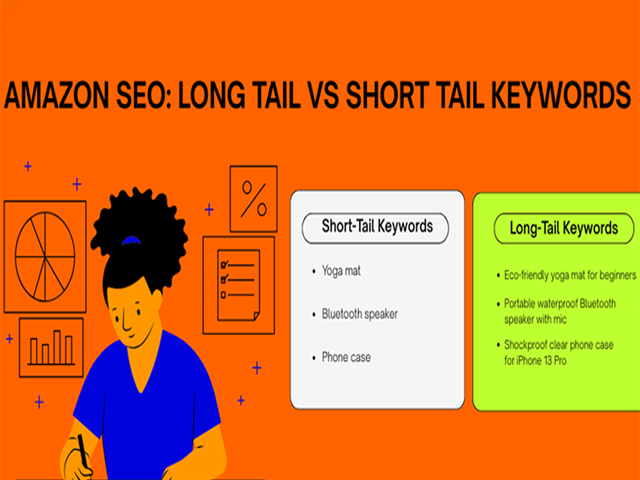
Long-Tail vs Short-Tail Keywords: What Works Best on Amazon?
Every product on Amazon starts with a search. What buyers type in that little search bar decides which listings show up, which ones get clicked, and eventually, which products get sold. That is why keywords matter so much. They connect the customer’s needs with your product. But not all keywords work the same way. Some are broad and short. Others are longer, more specific, and often more targeted.
Learn More →
FBA vs FBM in 2025: Which One Should You Choose?
Choosing between FBA and FBM is one of the most important decisions for Amazon sellers in 2025. The way you fulfill orders can shape your costs, customer experience and long-term growth. Fulfillment by Amazon, or FBA gives access to fast shipping with Prime and takes care of storage packing and returns.
Learn More →
How to Launch a Product on Amazon with Zero Reviews
Launching a product on Amazon with zero reviews may seem tough but it is possible with the right plan and clear execution. In 2025 Amazon gives more weight to how well your product performs in the first few weeks than how many reviews it has.
Learn More →
The Ultimate Amazon FBA Checklist for New Sellers
Your experience of being an Amazon FBA seller can be like a roller coaster ride, but there is much to get to know as well. Choosing the right product, managing the inventory, handling everything, every step counts in case you want to expand your store in the right direction.
Learn More →
Top Mistakes New Amazon Sellers Make and How to Avoid Them
Amazon selling may appear to be intriguing at first. You have millions of buyers at your fingertips, and with FBA and Seller Central, making your brand name appear is easy to do. But once you're in, you'll find it's not as easy as it seems. Most new sellers plunge into the work without knowing how Amazon works.
Learn More →
Understanding Amazon’s A9 Algorithm: A Complete Guide
Every product on Amazon starts with a search. What buyers type in that little search bar decides which listings show up, which ones get clicked, and eventually, which products get sold. That is why keywords matter so much. They connect the customer’s needs with your product. But not all keywords work the same way. Some are broad and short.
Learn More →
How to Write High-Converting Amazon Product Titles and Descriptions
When shoppers search on Amazon, the first thing that they see is your product listing. You lose them within 2 to 4 seconds when your title is vague or when your description is not being understood. However, when your content is well written, it does more than inform.
Learn More →
Why Your Amazon Listings Aren’t Converting (and How to Fix Them)
Selling on Amazon is more than getting your products listed. Your listing is your digital storefront, and every detail in it works like a sales pitch to the shopper. A good product with poor presentation will often lose to a competitor who communicates value more clearly.
Learn More →
A/B Testing Amazon Listings: What You Need to Know
Selling on Amazon is a constant process of improvement. The marketplace changes fast, and customer preferences shift without much notice. What works in a listing today may not be as effective next month. This is where A/B testing could turn out to be a very useful instrument to sellers who wish to make decisions on the basis of facts rather than guesses.
Learn More →
Using Backend Keywords on Amazon: Do They Still Matter?
When you list a product on Amazon, you face millions of competing items that are also fighting for visibility. Shoppers search with a wide mix of words. Some are common, while others are misspelled or written in different forms. To help sellers cover these variations, Amazon created backend keywords.
Learn More →
How to Improve Your Amazon Product Images for Better Clicks and Sales
Images are one of your most powerful tools for selling on Amazon. Customers choose to click before they even look at your product description or glance at your price point based on what they are viewing in the image. Over the past five years working closely with hundreds of Amazon sellers, I’ve witnessed how slight variations in product pictures can make huge differences in clicks and conversions.
Learn More →
Tracking Amazon Sales Trends: Tools & Strategies
Monitoring sales patterns at Amazon is not only what the successful Amazon sellers do, but it is also for everyone who aspires to establish a sustainable business. In the past five years, I have been assisting sellers to examine their performance statistics, identify trends early and make decisions that directly affect their profits.
Learn More →
Understanding Amazon Market Demand with Keyword Tools
Understanding what customers are searching for on Amazon is at the heart of smart selling. For the past five years, I’ve helped sellers connect with real demand by using keyword tools that uncover what shoppers are actively looking for. Market demand isn't a figure that represents consumer intention, interest, and purchasing behavior. If you ignore those indicators,
Learn More →
How to Do Competitive Analysis for Amazon Sellers
Winning on Amazon starts with clear competitive analysis, not guesswork. This guide breaks down how top sellers research rivals, read the market, and turn data into action. You will learn how to map your category, profile leading brands and emerging threats, and benchmark price, content quality, and delivery promises. We explain how to audit listings, uncover keyword gaps, and analyze images, A plus content, and reviews to find conversion levers.
Learn More →
Keyword Research for KDP: How to Rank Your Book on Amazon
With Kindle Direct Publishing (KDP), writers can self-publish and reach Amazon’s readership. Thousands of new books appear on Amazon every day, and without proper Amazon book keywords, your book can remain hidden. Keyword research on KDP helps your book show up in searches and reach the intended readers.
Learn More →
7 Mistakes First-Time KDP Authors Make (and How to Avoid Them)
Publishing a book for the first time can be exciting, but it can also be tricky. Many first-time Kindle Direct Publishing authors make mistakes that slow down their success. Avoiding these errors early can save time, money, and frustration. Here are seven common mistakes and tips on how to avoid them.
Learn More →
Free vs Paid Amazon Seller Tools: What You Really Need
Selling on Amazon is more competitive than ever. Millions of sellers compete for buyers, visibility, and sales every day. To succeed, sellers need the right tools to research products, track competitors, optimize listings, and analyze performance. One of the biggest decisions sellers face is whether to rely on free tools or invest in paid tools. Both can be useful, but each serves different purposes.
Learn More →
Top Chrome Extensions for Amazon Sellers in 2025
Amazon has become one of the busiest online marketplaces in the world. Every year more sellers join the platform and the level of competition increases. Sellers must understand demand, study buyer behavior, and pick the right products at the right time. In 2025, many tools promise to help with Amazon research, but only a few deliver real value through simple and accurate data. One Chrome extension that continues to support sellers in an effective way is Squatio.
Learn More →