

Table of Contents
How Long Tail and Short Tail Keywords Impact Amazon Sales
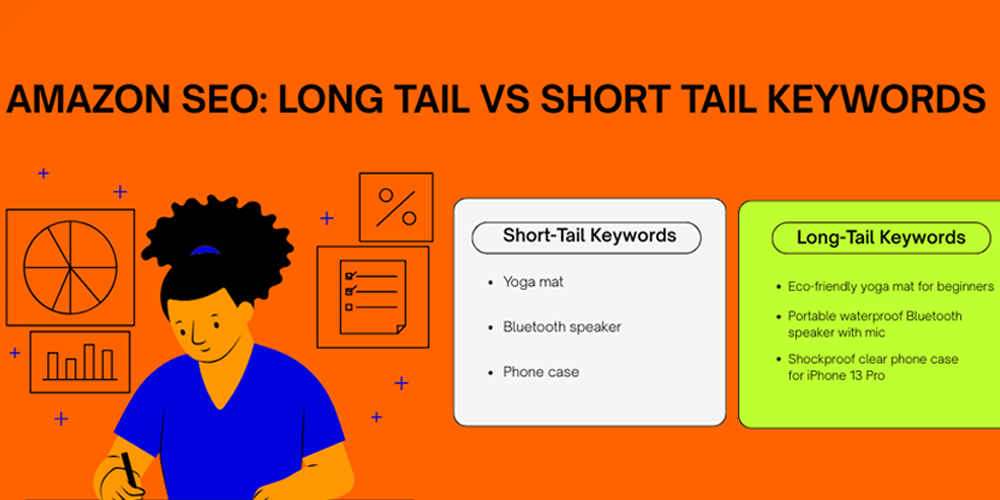
Every product on Amazon starts with a search. What buyers type in that little search bar decides which listings show up, which ones get clicked, and eventually, which products get sold. That is why keywords matter so much. They connect the customer’s needs with your product. But not all keywords work the same way. Some are broad and short. Others are longer, more specific, and often more targeted. In simple terms, these are short-tail and long-tail keywords. In the early days of selling on Amazon, sellers mostly focused on short-tail keywords. They looked for high-volume search terms, thinking that more traffic meant more sales. But over the years, the Amazon marketplace has become more competitive. Search behavior also changed. Buyers now use more detailed and specific phrases when they search, especially when they know exactly what they want. That is where long-tail keywords started to gain real value.
Sometimes keyword performance works as expected, and other times the results are surprising. I have worked with brands that launched products using short-tail terms and struggled with high ad costs. I have also seen small sellers use well-researched long-tail keywords to rank faster and convert better without burning through their ad budget. In this blog, I will break down what short-tail and long-tail keywords really are, how they work on Amazon, and when to use each one. Whether you are launching a new product or improving an existing one, understanding how these keywords behave in the Amazon ecosystem can change your entire strategy and your results
How To Rank for Keywords on Amazon for Better SEO & Rankings
How Amazon search engine uses keywords?
Amazon’s A9 search engine picks up keywords from different parts of your listing like the title, bullet points, and backend fields. It looks for exact matches first. Then it checks relevance and performance history to decide if your product deserves a higher spot in the search results.
Amazon SEO vs Google SEO
Amazon SEO focuses fully on buying intent. If a keyword does not help convert into a sale, Amazon will not rank that listing for long. Google SEO works more around clicks and traffic. On Amazon, every keyword must lead to sales to stay effective.
Role in organic ranking, PPC, and backend search
Good keyword use drives both organic and paid ranking. Organic rankings depend on how your keywords perform over time. For ads, keywords impact visibility and cost per click. Backend keywords help improve discoverability without crowding the visible parts of your listing.
Short Tail Keywords Definition & Examples for Successful SEO
Definition with examples
Short-tail keywords are one- or two-word terms that cover broad topics. For example, yoga mat or wireless headphones are short-tail terms. They bring in large search volumes but are not always specific about what the buyer wants.
High search volume and high competition
These keywords have high traffic, but many sellers use them. That leads to tough competition. It can be hard for new products to rank here without a strong sales record or high ad budget.
When sellers use short tail keywords
Sellers use short-tail keywords when they want to reach a wider audience or when they already rank high for that product type. Established sellers with lots of reviews often rely on these to defend their rank.
Pros and cons for Amazon listings
Short-tail keywords can bring large traffic, but not all clicks turn into sales. They may eat up your ad budget fast. If your product lacks reviews or sales history, it can struggle to compete in these broad keyword spaces.
Understanding Long Tail Keywords for Better Amazon Ranking
Definition with examples
Long-tail keywords are more specific phrases that often include three or more words. For example, an eco-friendly yoga mat for beginners or over-ear wireless headphones with a mic. These terms target buyers who know what they want and are closer to making a purchase.
Lower search volume, higher intent, lower competition
Long-tail keywords may not get as many searches, but they usually have higher intent. Buyers searching these terms are serious. Fewer sellers use them, which makes them easier to rank for and more budget-friendly in ads.
Pros and cons in Amazon context
The main benefit of long-tail keywords is better conversion. Since they match buyer intent closely, they often lead to quicker sales. The downside is slower traffic, which may take longer to build momentum compared to broader terms.
Short Tail vs Long Tail Keywords for Successful Amazon SEO
Search Volume
Short-tail keywords get more traffic but are less focused. Long-tail keywords get fewer searches but match what the buyer wants. It is better to have 100 serious buyers than 1000 random clicks that do not convert.
Conversion Rate
Long-tail keywords usually have higher conversion rates. They attract buyers who already made a decision. Short-tail keywords may bring window shoppers who are just browsing or comparing different options.
Cost per Click
Ads for short-tail keywords cost more due to higher competition. Long-tail keywords cost less and often deliver better value. For sellers with limited budgets, long-tail ads offer a smarter way to get results.
Competition
Short-tail keywords are crowded with big brands and top sellers. Long-tail keywords are easier to enter and compete in. New sellers can find better success using long-tail terms that fewer listings target directly.
Buyer Intent and Keyword Length
Short-tail keywords catch buyers at the start of their search. Long-tail keywords work better when the buyer is ready to buy. The longer the keyword, the clearer the intent. That makes it easier to match the product to the need.
What Works Best on Amazon & How does It Boosts Rankings
Product Launches
Long-tail keywords work better during new product launches. They give quicker traction and less ad waste. They help build early sales and reviews without fighting for space against big players.
Seasonal Trends
Short-tail keywords help during seasonal spikes because search volumes rise fast. But pairing them with seasonal long-tail versions gives better conversion. For example, a Christmas yoga mat for kids performs better than just a yoga mat in December.
Niche Products
For niche products, long-tail keywords are the best choice. They speak directly to a specific audience. They help you avoid broad terms that do not match your item and improve both organic and ad-based performance.
New Listings vs Established Sellers
New sellers should start with long-tail keywords to gain early wins. Established sellers with a strong rank can safely compete for short-tail terms and use ads to keep their position.
Organic and PPC Strategy
Use long-tail keywords in your listing to help with organic ranking. Use both long tail and short tail in PPC, but test small. Review which ones bring the best mix of clicks and sales, and adjust your budget accordingly.
Matching Keyword to Buyer Journey
When the buyer is just starting, they search short-tail terms. As they get closer to buying, they type more details. Using both keyword types lets your listing appear at every stage of that buyer’s journey.
Effective Keyword Optimization Tips for All Amazon Sellers
Avoid keyword stuffing
Stuffing your listing with too many keywords will hurt more than help. Amazon ranks listings based on clarity and buyer experience. When you pack too many keywords without purpose, your content looks forced. That lowers your click-through and may reduce conversion.
Use keyword phrases naturally
Keywords must flow like normal language. Add them where they fit, not where they feel pushed. A well-written title or bullet with natural phrases builds trust. That trust often leads to higher click rates and more purchases.
Refresh listings based on seasonal keyword changes
Buyer behavior shifts across seasons. Update your keywords to match those changes. For example, switch from a summer fitness mat to a home workout mat in colder months. This keeps your listing relevant and active across different buying cycles.
Monitor and tweak based on performance metrics
Track what works through your reports. Use data to spot underperforming terms and replace them. If a keyword brings clicks but not sales, test a more specific version. Keep refining until you see the right mix of traffic and conversion.
Expert-Guided Amazon Keyword Strategy for Smarter Selling
Choosing the right keywords on Amazon goes beyond just picking what sounds good. It requires a deep understanding of buyer intent product lifecycle stage and ranking behavior. Both long tail and short tail keywords have their roles in a successful strategy. To make informed data driven decisions with expert clarity Squatio offers powerful tools and guidance. With Squatio you can confidently plan, analyze and optimize your keyword strategy giving you a strong competitive edge in the Amazon marketplace.
Recent Blogs

How to Find Profitable Products to Sell on Amazon in 2025
Figuring out profitable products to sell on Amazon is the difference between success and failure for e-commerce. Standing out is difficult in a sea of over 2.5 million active sellers and millions of product offerings. However, the right product choice will make your Amazon store a successful business. As the market evolves in 2025, knowledge of the tools and data-driven strategies to help identify the best opportunities has become more essential than ever.
Learn More →
Best Amazon Keyword Research Tools Compared
inding the right keywords is the backbone of selling on Amazon. Every time a customer types something in the search bar, Amazon's algorithm picks products to show based on the keywords in the listings. That is why keyword research matters. It helps sellers determine what people look for and how frequently they do so.
Learn More →
Long-Tail vs Short-Tail Keywords: What Works Best on Amazon?
Every product on Amazon starts with a search. What buyers type in that little search bar decides which listings show up, which ones get clicked, and eventually, which products get sold. That is why keywords matter so much. They connect the customer’s needs with your product. But not all keywords work the same way. Some are broad and short. Others are longer, more specific, and often more targeted.
Learn More →
FBA vs FBM in 2025: Which One Should You Choose?
Choosing between FBA and FBM is one of the most important decisions for Amazon sellers in 2025. The way you fulfill orders can shape your costs, customer experience and long-term growth. Fulfillment by Amazon, or FBA gives access to fast shipping with Prime and takes care of storage packing and returns.
Learn More →
How to Launch a Product on Amazon with Zero Reviews
Launching a product on Amazon with zero reviews may seem tough but it is possible with the right plan and clear execution. In 2025 Amazon gives more weight to how well your product performs in the first few weeks than how many reviews it has.
Learn More →
The Ultimate Amazon FBA Checklist for New Sellers
Your experience of being an Amazon FBA seller can be like a roller coaster ride, but there is much to get to know as well. Choosing the right product, managing the inventory, handling everything, every step counts in case you want to expand your store in the right direction.
Learn More →
Top Mistakes New Amazon Sellers Make and How to Avoid Them
Amazon selling may appear to be intriguing at first. You have millions of buyers at your fingertips, and with FBA and Seller Central, making your brand name appear is easy to do. But once you're in, you'll find it's not as easy as it seems. Most new sellers plunge into the work without knowing how Amazon works.
Learn More →
Understanding Amazon’s A9 Algorithm: A Complete Guide
Every product on Amazon starts with a search. What buyers type in that little search bar decides which listings show up, which ones get clicked, and eventually, which products get sold. That is why keywords matter so much. They connect the customer’s needs with your product. But not all keywords work the same way. Some are broad and short.
Learn More →
How to Write High-Converting Amazon Product Titles and Descriptions
When shoppers search on Amazon, the first thing that they see is your product listing. You lose them within 2 to 4 seconds when your title is vague or when your description is not being understood. However, when your content is well written, it does more than inform.
Learn More →
Why Your Amazon Listings Aren’t Converting (and How to Fix Them)
Selling on Amazon is more than getting your products listed. Your listing is your digital storefront, and every detail in it works like a sales pitch to the shopper. A good product with poor presentation will often lose to a competitor who communicates value more clearly.
Learn More →
A/B Testing Amazon Listings: What You Need to Know
Selling on Amazon is a constant process of improvement. The marketplace changes fast, and customer preferences shift without much notice. What works in a listing today may not be as effective next month. This is where A/B testing could turn out to be a very useful instrument to sellers who wish to make decisions on the basis of facts rather than guesses.
Learn More →
Using Backend Keywords on Amazon: Do They Still Matter?
When you list a product on Amazon, you face millions of competing items that are also fighting for visibility. Shoppers search with a wide mix of words. Some are common, while others are misspelled or written in different forms. To help sellers cover these variations, Amazon created backend keywords.
Learn More →
How to Improve Your Amazon Product Images for Better Clicks and Sales
Images are one of your most powerful tools for selling on Amazon. Customers choose to click before they even look at your product description or glance at your price point based on what they are viewing in the image. Over the past five years working closely with hundreds of Amazon sellers, I’ve witnessed how slight variations in product pictures can make huge differences in clicks and conversions.
Learn More →
Tracking Amazon Sales Trends: Tools & Strategies
Monitoring sales patterns at Amazon is not only what the successful Amazon sellers do, but it is also for everyone who aspires to establish a sustainable business. In the past five years, I have been assisting sellers to examine their performance statistics, identify trends early and make decisions that directly affect their profits.
Learn More →
Understanding Amazon Market Demand with Keyword Tools
Understanding what customers are searching for on Amazon is at the heart of smart selling. For the past five years, I’ve helped sellers connect with real demand by using keyword tools that uncover what shoppers are actively looking for. Market demand isn't a figure that represents consumer intention, interest, and purchasing behavior. If you ignore those indicators,
Learn More →
How to Do Competitive Analysis for Amazon Sellers
Winning on Amazon starts with clear competitive analysis, not guesswork. This guide breaks down how top sellers research rivals, read the market, and turn data into action. You will learn how to map your category, profile leading brands and emerging threats, and benchmark price, content quality, and delivery promises. We explain how to audit listings, uncover keyword gaps, and analyze images, A plus content, and reviews to find conversion levers.
Learn More →
Keyword Research for KDP: How to Rank Your Book on Amazon
With Kindle Direct Publishing (KDP), writers can self-publish and reach Amazon’s readership. Thousands of new books appear on Amazon every day, and without proper Amazon book keywords, your book can remain hidden. Keyword research on KDP helps your book show up in searches and reach the intended readers.
Learn More →
7 Mistakes First-Time KDP Authors Make (and How to Avoid Them)
Publishing a book for the first time can be exciting, but it can also be tricky. Many first-time Kindle Direct Publishing authors make mistakes that slow down their success. Avoiding these errors early can save time, money, and frustration. Here are seven common mistakes and tips on how to avoid them.
Learn More →
Free vs Paid Amazon Seller Tools: What You Really Need
Selling on Amazon is more competitive than ever. Millions of sellers compete for buyers, visibility, and sales every day. To succeed, sellers need the right tools to research products, track competitors, optimize listings, and analyze performance. One of the biggest decisions sellers face is whether to rely on free tools or invest in paid tools. Both can be useful, but each serves different purposes.
Learn More →
Top Chrome Extensions for Amazon Sellers in 2025
Amazon has become one of the busiest online marketplaces in the world. Every year more sellers join the platform and the level of competition increases. Sellers must understand demand, study buyer behavior, and pick the right products at the right time. In 2025, many tools promise to help with Amazon research, but only a few deliver real value through simple and accurate data. One Chrome extension that continues to support sellers in an effective way is Squatio.
Learn More →