

Table of Contents
Write SEO-Friendly Amazon Title & Descriptions That Sell

When shoppers search on Amazon, the first thing that they see is your product listing. You lose them within 2 to 4 seconds when your title is vague or when your description is not being understood. However, when your content is well written, it does more than inform. It also gets the attention, provides a solution to questions, and helps people to buy.
Most of the sellers only care about keywords, but the actual conversion will be made depending on the words you use. Effective title becomes clarifying. The trust can be created through well-organized bullets. In describing the product, a smart text brings in meaning as opposed to facts. This blog will examine the correct way of writing every aspect of your listing. You will know what to do, what not to do, and how to write your content in a way that it appeals to your buyers. These methods guarantee the possibility of making your views convert into real sales, whether you are introducing something new or repairing an old posting.
Amazon Copywriting Rules for Product Title and Bullets
Before you start writing your product listing, it’s important to know what Amazon allows and what it expects. Amazon has clear rules for listing content. Breaking these rules can lead to suppressed listings or even account warnings.
Key Guidelines to Follow:
- Titles should be clear and contain relevant keywords but not be stuffed.
- Avoid using symbols like emojis, all caps, or promotional phrases (like “Best Seller” or “Top Rated”).
- Keep bullets concise and focused on product features and benefits.
- Don’t add pricing or shipping info in your title or bullet points.
- Maintain grammar and formatting consistency throughout.
Word Count Limits and Keyword Stuffing Guidelines
Amazon’s word limits vary by category, but here are the safe zones to work within:
| Content Element | Recommended Length |
|---|---|
| Product Title | 150–200 characters (varies by category) |
| Bullet Points | 5 bullets, each under 200 characters |
| Product Description | Up to 2000 characters |
| Backend Keywords | Max 250 bytes (not characters) |
What to Avoid:
- Repeating the same keyword more than once in a field.
- Stuffing unrelated or misspelled keywords.
- Using competitor brand names (can result in takedown).
- Writing for bots instead of people.
How to Craft a High-Converting Product Title
Your product title is the most visible part of your listing. It affects both ranking and click-through rate. A well-written title does two things:
- Matches what people are searching for.
- Tells them exactly what your product is in a simple format.
Recommended Title Structure:
[Brand] + [Main Keyword] + [Key Feature] + [Model/Size/Count]
Example:
BrightNest LED Desk Lamp – Dimmable Light with USB Charging – Black, Adjustable Neck
Tips to Write Better Titles:
- Front-load your main keyword so it gets picked up early by A9.
- Keep it clear and clean, not crowded.
- Avoid buzzwords like “Premium,” “Perfect for All,” or “Ultimate”—they reduce trust unless you can prove the claim.
- Match the way customers actually search, not just how you describe the item internally.
Best Practices for Bullet Points
Bullet points guide your shopper through the key details of your product. They also help Amazon understand what your product offers. The goal is to explain clearly what the product does and why it matters.
Follow This Format:
- Start with a strong word (like “Built-in,” “Includes,” or “Designed for”)—capitalize it for quick scanning.
- Describe a feature, then explain the benefit.
- Keep it simple, but detailed enough to answer common buyer questions.
Example:
FAST USB CHARGING – Includes built-in USB port to charge phones and tablets without extra plugs.
Pro Tips:
- Put the most important bullets first.
- Use each bullet for a unique selling point.
- Avoid long paragraphs. Stick to one idea per bullet.
Writing the Product Description
The product description gives you space to go deeper. You can explain the product’s use, highlight benefits, tell a story, and reinforce your keywords. It also helps your SEO when written well.
Use This Approach:
- Start with a quick summary of what the product does.
- Explain the real-world use cases.
- Reinforce how it solves a problem or adds value.
- Include secondary keywords naturally.
Formatting Tips:
- <br> for line breaks
- <b> to bold key phrases
- <ul> and <li> for bullet formatting (if supported)
Tone:
- If you’re a brand, balance branding voice with conversion-focused language.
- Talk to the buyer directly. Keep the tone clear, confident and human.
Backend Keywords and Hidden Fields
Backend keywords tell Amazon what your listing is about behind the scenes. These don’t show on your product page, but they help with search ranking.
How to Use Them Effectively:
- Fill the Search Terms field with relevant keywords you didn’t use in your visible listing.
- Don’t repeat words already used in the title or bullets.
- Use plural forms, common misspellings, and related terms.
- Separate words with spaces, not commas.
- Don’t use competitor names, brand names, or irrelevant keywords.
A/B Testing and Optimization
Amazon now allows A/B testing through its Manage Your Experiments tool (for brand-registered sellers). This helps you test different versions of your content to see what works best.
What You Can Test:
- Product Titles
- Main Images
- Bullet Points
- Descriptions
- A+ Content
Tools to Help:
- Use heatmaps and session data to see how buyers behave.
- Check CTR, conversion rates, and bounce rates using Amazon’s Brand Analytics or tools like Squatio or Helium 10.
- Always let tests run long enough (2–4 weeks) to get reliable data.
- Regular testing enables you to optimize and renew your listing for improved performance in the long run.
Common Copywriting Errors to Prevent
The majority of posts do not fail because of the product but because of bad writing. Avoid these mistakes if you want to build trust and get conversions.
- Keyword stuffing – Hurts readability and may lower ranking.
- All CAPS or emojis – Looks unprofessional and spammy.
- Too vague – Saying “high quality” without explaining how.
- Overuse of salesy words – “Amazing,” “Perfect,” “#1” – unless backed by actual data.
- No clear value to the buyer – If the text talks about the product, not what it does for the user.
Examples of High-Converting Listings
High-Converting Title:
GlowLite Himalayan Salt Lamp Hand-Carved Crystal Rock with Dimmer - 7 Inch, Natural Wooden Base
- Main keyword front-loaded: “Himalayan Salt Lamp”
- Clear size and feature: “Hand-Carved,” “Dimmer,” “Natural Base”
Bullet Point Example:
SOOTHING AMBIENT LIGHT – Creates a calming glow for bedrooms, offices, or yoga spaces.
- Feature and benefit in one line.
- Uses words customers search for.
Description Snippet:
Unwind with soothing, natural warmth from a beautiful, hand-crafted salt lamp made to induce peace in your home or workspace. Compact 7-inch lamp on a wood base
with a dimmer switch and pure 100% natural salt crystals. Utilize it to relax, enhance sleep, and add calmness to any room.
This design combines keyword placement with narrative and benefit-driven content that is ideal for conversion and SEO.
Write Better Amazon Titles And Descriptions With Squatio
Great content is what turns views into clicks and clicks into sales. When your product title speaks clearly, your bullet points show real benefits, and your description feels honest and helpful, shoppers start to trust your product, and that trust leads to action. But writing the perfect listing takes more than just words. It needs structure, data, and ongoing testing. That’s why platforms like Squatio make a real difference. From helping you find the right keywords to giving you tools to test and optimize your content, Squatio helps you write listings that convert and rank better. If you want your content to work harder for your product, Squatio can take you in the right direction that is backed by insights, not guesswork.
Recent Blogs
How to Find Profitable Products to Sell on Amazon in 2025
Figuring out profitable products to sell on Amazon is the difference between success and failure for e-commerce. Standing out is difficult in a sea of over 2.5 million active sellers and millions of product offerings. However, the right product choice will make your Amazon store a successful business. As the market evolves in 2025, knowledge of the tools and data-driven strategies to help identify the best opportunities has become more essential than ever.
Learn More →
Best Amazon Keyword Research Tools Compared
inding the right keywords is the backbone of selling on Amazon. Every time a customer types something in the search bar, Amazon's algorithm picks products to show based on the keywords in the listings. That is why keyword research matters. It helps sellers determine what people look for and how frequently they do so.
Learn More →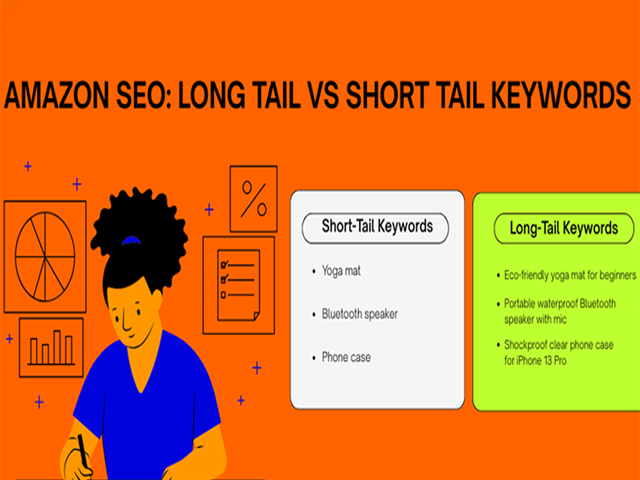
Long-Tail vs Short-Tail Keywords: What Works Best on Amazon?
Every product on Amazon starts with a search. What buyers type in that little search bar decides which listings show up, which ones get clicked, and eventually, which products get sold. That is why keywords matter so much. They connect the customer’s needs with your product. But not all keywords work the same way. Some are broad and short. Others are longer, more specific, and often more targeted.
Learn More →
FBA vs FBM in 2025: Which One Should You Choose?
Choosing between FBA and FBM is one of the most important decisions for Amazon sellers in 2025. The way you fulfill orders can shape your costs, customer experience and long-term growth. Fulfillment by Amazon, or FBA gives access to fast shipping with Prime and takes care of storage packing and returns.
Learn More →
How to Launch a Product on Amazon with Zero Reviews
Launching a product on Amazon with zero reviews may seem tough but it is possible with the right plan and clear execution. In 2025 Amazon gives more weight to how well your product performs in the first few weeks than how many reviews it has.
Learn More →
The Ultimate Amazon FBA Checklist for New Sellers
Your experience of being an Amazon FBA seller can be like a roller coaster ride, but there is much to get to know as well. Choosing the right product, managing the inventory, handling everything, every step counts in case you want to expand your store in the right direction.
Learn More →
Top Mistakes New Amazon Sellers Make and How to Avoid Them
Amazon selling may appear to be intriguing at first. You have millions of buyers at your fingertips, and with FBA and Seller Central, making your brand name appear is easy to do. But once you're in, you'll find it's not as easy as it seems. Most new sellers plunge into the work without knowing how Amazon works.
Learn More →
Understanding Amazon’s A9 Algorithm: A Complete Guide
Every product on Amazon starts with a search. What buyers type in that little search bar decides which listings show up, which ones get clicked, and eventually, which products get sold. That is why keywords matter so much. They connect the customer’s needs with your product. But not all keywords work the same way. Some are broad and short.
Learn More →
How to Write High-Converting Amazon Product Titles and Descriptions
When shoppers search on Amazon, the first thing that they see is your product listing. You lose them within 2 to 4 seconds when your title is vague or when your description is not being understood. However, when your content is well written, it does more than inform.
Learn More →
Why Your Amazon Listings Aren’t Converting (and How to Fix Them)
Selling on Amazon is more than getting your products listed. Your listing is your digital storefront, and every detail in it works like a sales pitch to the shopper. A good product with poor presentation will often lose to a competitor who communicates value more clearly.
Learn More →
A/B Testing Amazon Listings: What You Need to Know
Selling on Amazon is a constant process of improvement. The marketplace changes fast, and customer preferences shift without much notice. What works in a listing today may not be as effective next month. This is where A/B testing could turn out to be a very useful instrument to sellers who wish to make decisions on the basis of facts rather than guesses.
Learn More →
Using Backend Keywords on Amazon: Do They Still Matter?
When you list a product on Amazon, you face millions of competing items that are also fighting for visibility. Shoppers search with a wide mix of words. Some are common, while others are misspelled or written in different forms. To help sellers cover these variations, Amazon created backend keywords.
Learn More →
How to Improve Your Amazon Product Images for Better Clicks and Sales
Images are one of your most powerful tools for selling on Amazon. Customers choose to click before they even look at your product description or glance at your price point based on what they are viewing in the image. Over the past five years working closely with hundreds of Amazon sellers, I’ve witnessed how slight variations in product pictures can make huge differences in clicks and conversions.
Learn More →
Tracking Amazon Sales Trends: Tools & Strategies
Monitoring sales patterns at Amazon is not only what the successful Amazon sellers do, but it is also for everyone who aspires to establish a sustainable business. In the past five years, I have been assisting sellers to examine their performance statistics, identify trends early and make decisions that directly affect their profits.
Learn More →
Understanding Amazon Market Demand with Keyword Tools
Understanding what customers are searching for on Amazon is at the heart of smart selling. For the past five years, I’ve helped sellers connect with real demand by using keyword tools that uncover what shoppers are actively looking for. Market demand isn't a figure that represents consumer intention, interest, and purchasing behavior. If you ignore those indicators,
Learn More →
How to Do Competitive Analysis for Amazon Sellers
Winning on Amazon starts with clear competitive analysis, not guesswork. This guide breaks down how top sellers research rivals, read the market, and turn data into action. You will learn how to map your category, profile leading brands and emerging threats, and benchmark price, content quality, and delivery promises. We explain how to audit listings, uncover keyword gaps, and analyze images, A plus content, and reviews to find conversion levers.
Learn More →
Keyword Research for KDP: How to Rank Your Book on Amazon
With Kindle Direct Publishing (KDP), writers can self-publish and reach Amazon’s readership. Thousands of new books appear on Amazon every day, and without proper Amazon book keywords, your book can remain hidden. Keyword research on KDP helps your book show up in searches and reach the intended readers.
Learn More →
7 Mistakes First-Time KDP Authors Make (and How to Avoid Them)
Publishing a book for the first time can be exciting, but it can also be tricky. Many first-time Kindle Direct Publishing authors make mistakes that slow down their success. Avoiding these errors early can save time, money, and frustration. Here are seven common mistakes and tips on how to avoid them.
Learn More →
Free vs Paid Amazon Seller Tools: What You Really Need
Selling on Amazon is more competitive than ever. Millions of sellers compete for buyers, visibility, and sales every day. To succeed, sellers need the right tools to research products, track competitors, optimize listings, and analyze performance. One of the biggest decisions sellers face is whether to rely on free tools or invest in paid tools. Both can be useful, but each serves different purposes.
Learn More →
Top Chrome Extensions for Amazon Sellers in 2025
Amazon has become one of the busiest online marketplaces in the world. Every year more sellers join the platform and the level of competition increases. Sellers must understand demand, study buyer behavior, and pick the right products at the right time. In 2025, many tools promise to help with Amazon research, but only a few deliver real value through simple and accurate data. One Chrome extension that continues to support sellers in an effective way is Squatio.
Learn More →