

Table of Contents
Proven Strategy to Launch Amazon Product Without Reviews
Launching a product on Amazon with zero reviews may seem tough but it is possible with the right plan and clear execution. In 2025 Amazon gives more weight to how well your product performs in the first few weeks than how many reviews it has. If your listing is built to convert and your price matches the value you offer, you can still get sales without social proof. Amazon looks at how many people click your product, how long they stay on your page and how often they buy after landing. These signals help your product rise in search even if no one has reviewed it yet. This guide explains how to prepare your listing, use the right traffic sources, manage your early ads and track the results that matter most. You will learn how to work with Amazon’s system, not around it so your product gets noticed even without a single review.
Amazon A10 Algorithm Ranking Factors & Seller Tips 2025
Amazon uses smart systems to decide which products show up first in search results. These systems are called algorithms. In 2025, the two main ones are the A9 and the newer A10. Both look at how shoppers interact with your product page. They also check how often your product gets clicked and how many of those clicks turn into sales. This is called your click-through rate and conversion rate. If people are clicking your product and buying it often, Amazon sees it as a good match and ranks it higher. Another big part of the algorithm is how relevant your product is to what people are searching for. That means your title, bullets, and keywords must match the words buyers use. Fast delivery also matters. Products with faster shipping tend to rank better because shoppers like quick service.
Amazon also watches hidden signals. These include how long someone stays on your page, how often they scroll through your images, and if they go back to search after seeing your product. This is called time on page and session percent. If shoppers spend time on your page and do not leave right away, it tells Amazon that your product is helpful. The more your listing checks all these boxes, the better your chances of moving up in search results, even if you have zero reviews.
Amazon Pre-Launch Optimization Tips for First-Day Success
- Product research using intent-focused keywords: Choose keywords that match what buyers search on Amazon. Use tools to find intent-based terms so your Amazon product shows up for the right audience from day one.
- Crafting a high-converting title, bullets and backend terms: Write a clear Amazon product title with main keywords, then add helpful bullet points. Use backend search terms to cover extra phrases. This helps Amazon ranking from the start.
- Image sequencing strategy and infographic value: Your first image should show the product clearly. Then use lifestyle images and product infographics to explain use or size. This boosts conversion rate from early traffic.
- Setting up listings with clarity for conversions, not just traffic: Make sure your Amazon product listing answers buyer questions. Keep it clean with simple copy and strong images. A clear listing improves sales without reviews and drives Amazon conversions.
Amazon Pricing Strategy to Boost Sales Without Losing Margin
- Psychological pricing for new listings: Use numbers like 19.99 or 24.95 instead of round figures. This pricing strategy helps improve Amazon conversions and makes your new listing look more affordable.
- How to use discounts and coupons to boost clicks: Apply Amazon coupons and limited-time discounts to catch buyer attention. These tools increase your click-through rate and help new products earn more visibility during the early days.
- Using limited-time pricing to trigger urgency: Mark your Amazon product listing with a countdown offer or limited-time deal. This creates urgency and pushes faster buying decisions even before you get customer reviews.
Drive External Traffic to Boost Amazon Sales Like a Pro
- Using Google Ads and TikTok to push initial traffic: Run Google Ads targeting your product’s top Amazon search keywords to drive early traffic. Use Instagram and other social media videos with real-life demos to boost clicks and improve your Amazon product ranking from the outside.
- Working with micro-influencers without free product offers: Reach out to micro-influencers with small but trusted audiences. Offer affiliate links or commissions instead of free products. This builds trust and sends quality external traffic that helps your Amazon product page convert even without reviews.
- Reddit and niche community launches that Amazon tracks as warm traffic: Promote in Reddit threads and niche forums where buyers ask for suggestions. When people click from these sources, Amazon counts it as warm traffic, which improves session quality and boosts your Amazon listing performance early on.
Get Sales Without Reviews: Smart Tactics That Work
1. Use the Amazon Vine Program if eligible
If your product qualifies, enroll in the Amazon Vine Program to get genuine reviews from verified customers. These reviews appear rapidly, are of high search weight, and help create improved early Amazon product visibility even before organic customer feedback starts coming in.
2. Add insert cards to packaging to ask for reviews
Place a simple review request card inside your product packaging with a polite message. Avoid incentives. Focus on gratitude and how much customer feedback helps improve quality. This method helps build early engagement and gives your brand a better first impression without breaking Amazon’s terms.
3. Offer bundles to boost perceived value in SERPs
Offer intelligent Amazon bundles where you put one of your main products along with a tiny accessory. Such a strategy improves your conversion rates and makes you visible on the Amazon search results page (SERP) even before you have received any reviews of your listing.
4. Use high-quality packaging to create brand impact
Your ecommerce packaging must be unique and creative enough to make a consumer feel as though he is purchasing the services of a top-notch brand. Good unboxing experience may result in word-of-mouth and free reviews by happy clients, who will appear closer to you and your product.
5. Highlight product benefits clearly in your listing
Without reviews, your product detail page must do the heavy lifting. Use infographics, lifestyle images, and strong benefit-focused bullet points to answer shopper questions and reduce doubts. This builds trust and drives conversions even when social proof is missing.
Make the First 30 Days Count: Conversion is King
Why session-to-sale rate matters more than total sessions
- Many sellers chase high traffic, but Amazon cares more about conversion rate, not just visitors.
- A high session-to-sale ratio tells Amazon your listing satisfies buyers, pushing your rank higher.
- Even with low traffic, if conversions are strong, your Amazon product listing gains trust in the algorithm.
- Focus on quality traffic that converts, not just high-volume clicks.
Monitoring key metrics: CTR, CVR, BSR movement
- Track click-through rate (CTR) to measure how well your title and image drive attention.
- Watch your conversion rate (CVR) to understand how visitors respond after landing on your listing.
- Keep an eye on your Best Seller Rank (BSR) daily to gauge sales velocity and progress.
- Use Amazon’s business reports to spot early trends and fix drop-offs fast.
Adjusting images and copy based on early buyer behavior
- Use the first few weeks to test main image performance and rotate different visuals to see what earns more clicks.
- Review search term reports and adjust product copy to better match what shoppers type in.
- If conversion dips, update bullet points or add comparison charts to boost clarity.
- Every small tweak based on behavior improves your Amazon conversion metrics faster.
Leverage Amazon PPC Efficiently Without Wasting Your Budget
- How to set up auto and manual campaigns with tight control: Start with both auto and manual campaigns. Let auto campaigns collect keyword data while manual targets high-converting terms. Set low daily budgets and monitor performance daily to avoid waste.
- Targeting long-tail and branded terms for lower CPC: Focus your manual campaigns on long-tail keywords with low competition. These terms have better buyer intent and cost less per click, helping boost your early conversions on a limited budget.
- Using Sponsored Display to retarget page visitors: Run Sponsored Display Ads to follow visitors who saw your listing but did not buy. Retargeting keeps your product top of mind and helps you recover potential lost sales after visits.
Avoid These Common Pitfalls with New Listings
- Why over-optimizing from day one can backfire: Making too many changes early confuses Amazon’s system and delays ranking. Focus on clean setup and consistent performance first.
- Setting expectations on review timing: Reviews take time. Do not expect instant feedback. Stay patient and focus on delivering value that encourages long-term customer trust.
- Not monitoring returns and voice of customer impact: High return rates or negative buyer feedback hurt listing health. Track issues fast and fix them before Amazon lowers your rank.
Amazon Product Launch Strategy for Long-Term Success in 2025
To succeed with a new product launch on Amazon in 2025, you must balance both internal and external signals. Internally, your product listing must be clear, keyword-rich, and designed to convert. High-quality images, simple bullet points, and relevant backend terms help Amazon understand your product and show it in the right searches. Externally, you must bring steady traffic through sources like YouTube reels, Google, and community posts. These signals build early momentum and push your product up in search, even without reviews.
As your listing gains clicks and sales, begin to scale your Amazon PPC campaigns. Focus more on converting keywords and increase bids slowly as profits rise. If your conversion rate stays strong, you can also test raising your price in small steps. This helps improve profit without hurting visibility. Watch your ASIN health score closely, which reflects how your product performs across returns, delivery issues, and customer experience. A strong score means Amazon will keep showing your product more often.
Finally, focus on turning happy buyers into reviewers. Send follow-up messages, use polite insert cards, and improve packaging to build a lasting impression. Reviews will grow over time when buyers feel your product and service meet their needs. If you need expert help to manage this full process and grow with clarity, Squatio is a reliable partner that offers tools, insights, and fulfillment support customized for long-term Amazon success.
Recent Blogs
How to Find Profitable Products to Sell on Amazon in 2025
Figuring out profitable products to sell on Amazon is the difference between success and failure for e-commerce. Standing out is difficult in a sea of over 2.5 million active sellers and millions of product offerings. However, the right product choice will make your Amazon store a successful business. As the market evolves in 2025, knowledge of the tools and data-driven strategies to help identify the best opportunities has become more essential than ever.
Learn More →
Best Amazon Keyword Research Tools Compared
inding the right keywords is the backbone of selling on Amazon. Every time a customer types something in the search bar, Amazon's algorithm picks products to show based on the keywords in the listings. That is why keyword research matters. It helps sellers determine what people look for and how frequently they do so.
Learn More →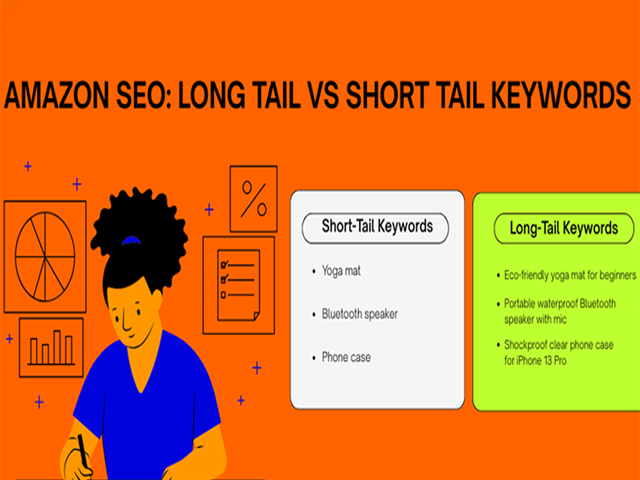
Long-Tail vs Short-Tail Keywords: What Works Best on Amazon?
Every product on Amazon starts with a search. What buyers type in that little search bar decides which listings show up, which ones get clicked, and eventually, which products get sold. That is why keywords matter so much. They connect the customer’s needs with your product. But not all keywords work the same way. Some are broad and short. Others are longer, more specific, and often more targeted.
Learn More →
FBA vs FBM in 2025: Which One Should You Choose?
Choosing between FBA and FBM is one of the most important decisions for Amazon sellers in 2025. The way you fulfill orders can shape your costs, customer experience and long-term growth. Fulfillment by Amazon, or FBA gives access to fast shipping with Prime and takes care of storage packing and returns.
Learn More →
How to Launch a Product on Amazon with Zero Reviews
Launching a product on Amazon with zero reviews may seem tough but it is possible with the right plan and clear execution. In 2025 Amazon gives more weight to how well your product performs in the first few weeks than how many reviews it has.
Learn More →
The Ultimate Amazon FBA Checklist for New Sellers
Your experience of being an Amazon FBA seller can be like a roller coaster ride, but there is much to get to know as well. Choosing the right product, managing the inventory, handling everything, every step counts in case you want to expand your store in the right direction.
Learn More →
Top Mistakes New Amazon Sellers Make and How to Avoid Them
Amazon selling may appear to be intriguing at first. You have millions of buyers at your fingertips, and with FBA and Seller Central, making your brand name appear is easy to do. But once you're in, you'll find it's not as easy as it seems. Most new sellers plunge into the work without knowing how Amazon works.
Learn More →
Understanding Amazon’s A9 Algorithm: A Complete Guide
Every product on Amazon starts with a search. What buyers type in that little search bar decides which listings show up, which ones get clicked, and eventually, which products get sold. That is why keywords matter so much. They connect the customer’s needs with your product. But not all keywords work the same way. Some are broad and short.
Learn More →
How to Write High-Converting Amazon Product Titles and Descriptions
When shoppers search on Amazon, the first thing that they see is your product listing. You lose them within 2 to 4 seconds when your title is vague or when your description is not being understood. However, when your content is well written, it does more than inform.
Learn More →
Why Your Amazon Listings Aren’t Converting (and How to Fix Them)
Selling on Amazon is more than getting your products listed. Your listing is your digital storefront, and every detail in it works like a sales pitch to the shopper. A good product with poor presentation will often lose to a competitor who communicates value more clearly.
Learn More →
A/B Testing Amazon Listings: What You Need to Know
Selling on Amazon is a constant process of improvement. The marketplace changes fast, and customer preferences shift without much notice. What works in a listing today may not be as effective next month. This is where A/B testing could turn out to be a very useful instrument to sellers who wish to make decisions on the basis of facts rather than guesses.
Learn More →
Using Backend Keywords on Amazon: Do They Still Matter?
When you list a product on Amazon, you face millions of competing items that are also fighting for visibility. Shoppers search with a wide mix of words. Some are common, while others are misspelled or written in different forms. To help sellers cover these variations, Amazon created backend keywords.
Learn More →
How to Improve Your Amazon Product Images for Better Clicks and Sales
Images are one of your most powerful tools for selling on Amazon. Customers choose to click before they even look at your product description or glance at your price point based on what they are viewing in the image. Over the past five years working closely with hundreds of Amazon sellers, I’ve witnessed how slight variations in product pictures can make huge differences in clicks and conversions.
Learn More →
Tracking Amazon Sales Trends: Tools & Strategies
Monitoring sales patterns at Amazon is not only what the successful Amazon sellers do, but it is also for everyone who aspires to establish a sustainable business. In the past five years, I have been assisting sellers to examine their performance statistics, identify trends early and make decisions that directly affect their profits.
Learn More →
Understanding Amazon Market Demand with Keyword Tools
Understanding what customers are searching for on Amazon is at the heart of smart selling. For the past five years, I’ve helped sellers connect with real demand by using keyword tools that uncover what shoppers are actively looking for. Market demand isn't a figure that represents consumer intention, interest, and purchasing behavior. If you ignore those indicators,
Learn More →
How to Do Competitive Analysis for Amazon Sellers
Winning on Amazon starts with clear competitive analysis, not guesswork. This guide breaks down how top sellers research rivals, read the market, and turn data into action. You will learn how to map your category, profile leading brands and emerging threats, and benchmark price, content quality, and delivery promises. We explain how to audit listings, uncover keyword gaps, and analyze images, A plus content, and reviews to find conversion levers.
Learn More →
Keyword Research for KDP: How to Rank Your Book on Amazon
With Kindle Direct Publishing (KDP), writers can self-publish and reach Amazon’s readership. Thousands of new books appear on Amazon every day, and without proper Amazon book keywords, your book can remain hidden. Keyword research on KDP helps your book show up in searches and reach the intended readers.
Learn More →
7 Mistakes First-Time KDP Authors Make (and How to Avoid Them)
Publishing a book for the first time can be exciting, but it can also be tricky. Many first-time Kindle Direct Publishing authors make mistakes that slow down their success. Avoiding these errors early can save time, money, and frustration. Here are seven common mistakes and tips on how to avoid them.
Learn More →
Free vs Paid Amazon Seller Tools: What You Really Need
Selling on Amazon is more competitive than ever. Millions of sellers compete for buyers, visibility, and sales every day. To succeed, sellers need the right tools to research products, track competitors, optimize listings, and analyze performance. One of the biggest decisions sellers face is whether to rely on free tools or invest in paid tools. Both can be useful, but each serves different purposes.
Learn More →
Top Chrome Extensions for Amazon Sellers in 2025
Amazon has become one of the busiest online marketplaces in the world. Every year more sellers join the platform and the level of competition increases. Sellers must understand demand, study buyer behavior, and pick the right products at the right time. In 2025, many tools promise to help with Amazon research, but only a few deliver real value through simple and accurate data. One Chrome extension that continues to support sellers in an effective way is Squatio.
Learn More →