

Table of Contents
Steps for KDP Keyword Research to Rank Your Book on Amazon
With Kindle Direct Publishing (KDP), writers can self-publish and reach Amazon’s readership. Thousands of new books appear on Amazon every day, and without proper Amazon book keywords, your book can remain hidden. Keyword research on KDP helps your book show up in searches and reach the intended readers. Targeting the appropriate keywords increases visibility and could boost sales. This manual gives concrete techniques to find keywords with high conversion rates and assists you to rank your book on Amazon quickly.
Find Best KDP Keywords to Rank Your Book on Amazon Fast
Amazon book keywords are the words or phrases readers enter when searching for books. They help Amazon show your book to people looking for similar topics. Selecting the right Kindle keywords through KDP SEO helps your book appear in search results. Proper Amazon book keywords increase its visibility and connect it with readers looking for similar content.
Amazon search works differently from Google. Instead of general traffic, Amazon focuses on how closely a book matches what a reader wants to buy. When you choose accurate Amazon book keywords and apply them through KDP SEO, you help Amazon understand your topic faster. This improves your ranking, supports steady sales, and makes it easier for the right readers to find your book.
Step 1: Build Your Seed Keyword List
Seed keywords are the starting point for KDP keyword research. They are simple words or phrases that relate to your book topic, your readers’ needs, and Amazon search trends. These keywords help you find long-tail keywords that are easier to rank for and connect your book with the right audience.
For example, a book on “Mindfulness for Beginners” can use mindfulness, meditation, and stress relief as seed keywords.
Use these methods to generate seed keywords efficiently:
- Book topic & subtopics: Break your topic into simple terms readers might type.
- Competitor books: Scan comparable books for words readers often search for.
- Reader pain points or desires: Think about the problems your audience wants to solve.
- Amazon autocomplete: Type related terms in Amazon search and note the suggestions.
Step 2: Use Keyword Research Tools
Good KDP keyword research starts with tools that highlight real search patterns. Exploring different tools helps you choose terms that match your book topic accurately.
- Paid tools: Publisher Rocket, KDSpy, Helium 10, give insights on search trends and competing books.
- Free tools: Amazon autocomplete, Google Keyword Planner, help spot what readers type most.
- Metrics to check: Focus on volume, competition, and relevance for effective keyword selection.
Step 3: Identify High-Intent Long-Tail Keywords
Long-tail keywords zoom in on specific reader needs by using detailed 3–5 word phrases. Because they target well-defined interests, your book has a better chance of appearing where competition is lighter. Adding them naturally to your metadata strengthens your KDP SEO and helps your book reach a more relevant audience.
For example, “meal prep” is short-tail, while “easy meal prep ideas for busy students” is a long-tail keyword.
Use these tips to identify strong long-tail keywords:
- Combine seed keywords: Expand simple terms into more specific versions.
- Target niche problems: Focus on precise reader pain points or goals.
- Observe Amazon suggestions: Look for 3–5 word phrases that match your topic.
Step 4: Position Your Keywords for Maximum Impact
Your book's appearance in Amazon searches depends on the placement of keywords. Amazon can connect your book more precisely with readers looking for your subject when the main keywords are used in vital fields.
For example, “Mindfulness for Beginners: Stress Relief and Meditation Techniques” includes relevant keywords without feeling crowded.
Use these areas to optimize your keyword placement:
- Book title & subtitle: Add essential terms that fit smoothly without disrupting clarity.
- Book description: Weave supporting keywords into the narrative and benefits.
- KDP backend keyword slots: Use remaining phrases that extend your topic reach.
- Categories: Select categories that match your subject to reinforce topical relevance.
Step 5: Study Competing Books Strategically
Best-selling books in your genre show you the common approach to presenting a title. Notice the keywords they use and how they arrange the important details. This helps you see useful patterns and find keyword opportunities they may have missed.
For example, a bestseller may focus on broad terms but overlook long-tail phrases your audience actively searches for. Use these insights to strengthen your KDP competitor research strategy.
Step 6: Review, Refine, and Refresh Your Keywords
KDP keyword research doesn’t end after publishing. Your Amazon book ranking can shift over time, so it’s important to review how your keywords perform. Check whether your book is showing up for the terms you targeted and replace keywords that are not bringing visibility.
Testing new variations helps you find phrases that match what readers search for. Updating your keywords regularly keeps them current, improves discoverability, and slowly strengthens your book’s position in Amazon searches.
Extra Tip: When updating your metadata, avoid repeating the same keywords too often. Add synonyms or close variations to cover related searches, and remember that Amazon’s A10 algorithm places more value on relevance and actual reader engagement.
Improve KDP Keyword Strategy for Better Amazon Ranking
Keywords play a major role in your Amazon book ranking and overall visibility. Start your KDP keyword research with seed terms, use reliable tools, and add long-tail keywords that match reader searches. Track your results and update weak terms as you grow. Squatio supports this process with an easy-to-use keyword tool that helps you find, organize, and refine the right terms for your book. Take action today and optimize your metadata to boost book sales.
Recent Blogs

How to Find Profitable Products to Sell on Amazon in 2025
Figuring out profitable products to sell on Amazon is the difference between success and failure for e-commerce. Standing out is difficult in a sea of over 2.5 million active sellers and millions of product offerings. However, the right product choice will make your Amazon store a successful business. As the market evolves in 2025, knowledge of the tools and data-driven strategies to help identify the best opportunities has become more essential than ever.
Learn More →
Best Amazon Keyword Research Tools Compared
inding the right keywords is the backbone of selling on Amazon. Every time a customer types something in the search bar, Amazon's algorithm picks products to show based on the keywords in the listings. That is why keyword research matters. It helps sellers determine what people look for and how frequently they do so.
Learn More →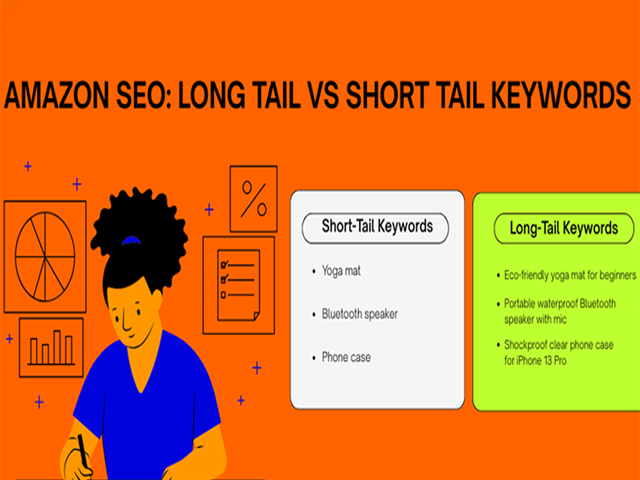
Long-Tail vs Short-Tail Keywords: What Works Best on Amazon?
Every product on Amazon starts with a search. What buyers type in that little search bar decides which listings show up, which ones get clicked, and eventually, which products get sold. That is why keywords matter so much. They connect the customer’s needs with your product. But not all keywords work the same way. Some are broad and short. Others are longer, more specific, and often more targeted.
Learn More →
FBA vs FBM in 2025: Which One Should You Choose?
Choosing between FBA and FBM is one of the most important decisions for Amazon sellers in 2025. The way you fulfill orders can shape your costs, customer experience and long-term growth. Fulfillment by Amazon, or FBA gives access to fast shipping with Prime and takes care of storage packing and returns.
Learn More →
How to Launch a Product on Amazon with Zero Reviews
Launching a product on Amazon with zero reviews may seem tough but it is possible with the right plan and clear execution. In 2025 Amazon gives more weight to how well your product performs in the first few weeks than how many reviews it has.
Learn More →
The Ultimate Amazon FBA Checklist for New Sellers
Your experience of being an Amazon FBA seller can be like a roller coaster ride, but there is much to get to know as well. Choosing the right product, managing the inventory, handling everything, every step counts in case you want to expand your store in the right direction.
Learn More →
Top Mistakes New Amazon Sellers Make and How to Avoid Them
Amazon selling may appear to be intriguing at first. You have millions of buyers at your fingertips, and with FBA and Seller Central, making your brand name appear is easy to do. But once you're in, you'll find it's not as easy as it seems. Most new sellers plunge into the work without knowing how Amazon works.
Learn More →
Understanding Amazon’s A9 Algorithm: A Complete Guide
Every product on Amazon starts with a search. What buyers type in that little search bar decides which listings show up, which ones get clicked, and eventually, which products get sold. That is why keywords matter so much. They connect the customer’s needs with your product. But not all keywords work the same way. Some are broad and short.
Learn More →
How to Write High-Converting Amazon Product Titles and Descriptions
When shoppers search on Amazon, the first thing that they see is your product listing. You lose them within 2 to 4 seconds when your title is vague or when your description is not being understood. However, when your content is well written, it does more than inform.
Learn More →
Why Your Amazon Listings Aren’t Converting (and How to Fix Them)
Selling on Amazon is more than getting your products listed. Your listing is your digital storefront, and every detail in it works like a sales pitch to the shopper. A good product with poor presentation will often lose to a competitor who communicates value more clearly.
Learn More →
A/B Testing Amazon Listings: What You Need to Know
Selling on Amazon is a constant process of improvement. The marketplace changes fast, and customer preferences shift without much notice. What works in a listing today may not be as effective next month. This is where A/B testing could turn out to be a very useful instrument to sellers who wish to make decisions on the basis of facts rather than guesses.
Learn More →
Using Backend Keywords on Amazon: Do They Still Matter?
When you list a product on Amazon, you face millions of competing items that are also fighting for visibility. Shoppers search with a wide mix of words. Some are common, while others are misspelled or written in different forms. To help sellers cover these variations, Amazon created backend keywords.
Learn More →
How to Improve Your Amazon Product Images for Better Clicks and Sales
Images are one of your most powerful tools for selling on Amazon. Customers choose to click before they even look at your product description or glance at your price point based on what they are viewing in the image. Over the past five years working closely with hundreds of Amazon sellers, I’ve witnessed how slight variations in product pictures can make huge differences in clicks and conversions.
Learn More →
Tracking Amazon Sales Trends: Tools & Strategies
Monitoring sales patterns at Amazon is not only what the successful Amazon sellers do, but it is also for everyone who aspires to establish a sustainable business. In the past five years, I have been assisting sellers to examine their performance statistics, identify trends early and make decisions that directly affect their profits.
Learn More →
Understanding Amazon Market Demand with Keyword Tools
Understanding what customers are searching for on Amazon is at the heart of smart selling. For the past five years, I’ve helped sellers connect with real demand by using keyword tools that uncover what shoppers are actively looking for. Market demand isn't a figure that represents consumer intention, interest, and purchasing behavior. If you ignore those indicators,
Learn More →
How to Do Competitive Analysis for Amazon Sellers
Winning on Amazon starts with clear competitive analysis, not guesswork. This guide breaks down how top sellers research rivals, read the market, and turn data into action. You will learn how to map your category, profile leading brands and emerging threats, and benchmark price, content quality, and delivery promises. We explain how to audit listings, uncover keyword gaps, and analyze images, A plus content, and reviews to find conversion levers.
Learn More →
Keyword Research for KDP: How to Rank Your Book on Amazon
With Kindle Direct Publishing (KDP), writers can self-publish and reach Amazon’s readership. Thousands of new books appear on Amazon every day, and without proper Amazon book keywords, your book can remain hidden. Keyword research on KDP helps your book show up in searches and reach the intended readers.
Learn More →
7 Mistakes First-Time KDP Authors Make (and How to Avoid Them)
Publishing a book for the first time can be exciting, but it can also be tricky. Many first-time Kindle Direct Publishing authors make mistakes that slow down their success. Avoiding these errors early can save time, money, and frustration. Here are seven common mistakes and tips on how to avoid them.
Learn More →
Free vs Paid Amazon Seller Tools: What You Really Need
Selling on Amazon is more competitive than ever. Millions of sellers compete for buyers, visibility, and sales every day. To succeed, sellers need the right tools to research products, track competitors, optimize listings, and analyze performance. One of the biggest decisions sellers face is whether to rely on free tools or invest in paid tools. Both can be useful, but each serves different purposes.
Learn More →
Top Chrome Extensions for Amazon Sellers in 2025
Amazon has become one of the busiest online marketplaces in the world. Every year more sellers join the platform and the level of competition increases. Sellers must understand demand, study buyer behavior, and pick the right products at the right time. In 2025, many tools promise to help with Amazon research, but only a few deliver real value through simple and accurate data. One Chrome extension that continues to support sellers in an effective way is Squatio.
Learn More →