

Table of Contents
How to Analyze Amazon Revenue Growth with Sales Insights

Monitoring sales patterns at Amazon is not only what the successful Amazon sellers do, but it is also for everyone who aspires to establish a sustainable business. In the past five years, I have been assisting sellers to examine their performance statistics, identify trends early and make decisions that directly affect their profits. Be it seasonal demand or unexpected causes of changes in customer behavior, keeping ahead of the trends can save you the unnecessary error of either overstocking or losing opportunities. One does not just have to review the daily sales reports. You must read trends, juxtapose data points and act with intelligent responses founded on actual perceptions. In this blog I will deconstruct the most important metrics that count, the tools that I have seen to work best, and how you can use the information to keep ahead of the competition. At the end, you will realize how monitoring trends can be used in guiding all aspects of your business, such as inventory, pricing and advertisements.
Step-by-Step Guide Using Amazon Keyword Tools for Demand
Setting Filters for Relevance and Volume
- Choose keywords with consistent monthly search volume rather than occasional spikes.
- Filter out irrelevant terms that don’t match your product’s category or use case.
- Prioritize terms that reflect buying intent, like “best,” “reviews,” or “buy.”
Comparing Long-Tail vs Short-Tail Keywords
| Keyword Type | Description | When to Use |
|---|---|---|
| Short-Tail | General, high-volume searches (e.g., “water bottle”) | Good for broad visibility but highly competitive |
| Long-Tail | Specific, lower-volume searches (e.g., “stainless steel insulated water bottle 1 liter”) | Easier to rank for and often higher conversion rates |
Seasonal vs Evergreen Demand Insights
Seasonal Keywords
- Linked to holidays, weather changes, or trends
- Require timely campaigns and stock adjustments
Evergreen Keywords
- Steady interest throughout the year
- Ideal for long-term products and brand building
Expert Note:
A smart seller mixes both seasonal and evergreen keywords to balance short-term wins with sustainable growth.
Keyword Prioritization Framework for Amazon Listing Success
| Step | What to Do | Why It Helps |
|---|---|---|
| 1. Identify keywords with high search volume | Use tools to shortlist popular terms | Ensures you’re targeting active buyer interest |
| 2. Check competition levels | Avoid terms dominated by top sellers unless you have a differentiator | Helps focus on achievable targets |
| 3. Estimate profitability | Factor in pricing, margins, and ad spend | Prioritizes sustainable, not just popular, opportunities |
| 4. Cross-check trends | Compare past and current data | Validates long-term relevance |
Expert Insight:
The best keywords are not always the most searched—they’re the ones customers are ready to buy, where competition is manageable, and your product stands out.
Optimize Amazon Listings Based on Market Demand Insights
- Front-load the most relevant terms customers search for
- Explain key features while integrating secondary keywords
- Tell a story, educate buyers, and naturally work in related search terms
Title
Avoiding Keyword Stuffing
- Keep readability and tone in mind—overusing keywords makes descriptions look spammy
- Use synonyms and variations to enhance discoverability without forcing repetition
Expert Advice:
A listing that’s optimized feels natural, flows well, and provides customers with the answers they need while staying search-friendly.
Monitoring Trends: How Demand Shifts Over Time
Using Historical Search Data
- Compare trends year-over-year to spot recurring demand cycles
- Identify emerging interests before competitors jump in
Planning Inventory and Ads for Seasonal Fluctuations
- Ramp up stock ahead of high-demand periods like holidays.
- Launch targeted ads during spikes in search volume.
- Reduce inventory for slow periods to avoid dead stock
Expert Tip:
Monitoring trends regularly lets you act proactively instead of scrambling to catch up with sudden changes.
Integrate Keyword Insights with Amazon Product Research
Keyword data becomes powerful when paired with broader product research.
Identify Gaps in the Market
- Look for keywords with decent volume but few top-ranking products
- Explore niche segments where customer needs are underserved
Understand Competitor Strategies
- Study the keywords competitors rank for
- Adapt your messaging, pricing, and ads to position yourself uniquely
Expert Insight:
Keyword tools don’t just help with search optimization; they guide product development, pricing, and customer targeting.
Case Study: From Zero to Bestseller Using Keyword Optimization
The Research Process
- Started by analyzing keyword trends with Jungle Scout and MerchantWords
- Identified a gap in premium, eco-friendly kitchen products with growing demand
- Filtered long-tail keywords like “BPA-free glass food containers” to target buyers ready to convert
Execution
- Optimized the listing title and bullet points with prioritized keywords
- Created content explaining health benefits and storage tips
- Scheduled ads aligned with seasonal peaks in organic searches
Measurable Results
- The product went from zero reviews to top 5 in its category within 3 months.
- Conversion rates improved by 40% after keyword optimization.
- Inventory planning based on search trends prevented stockouts during high-demand periods
Expert Takeaway:
When performed with informed insights and customer knowledge, the optimization of keywords can turn a product people do not know into a bestseller with no huge budget or even guesses.
Amazon Sales Tracking Tools to Monitor Growth & Performance
Interpreting customer search behavior through keyword tools unlocks opportunities that others overlook. When you align keywords with intent, competition, and trends, you position your product for discovery and growth. A smart approach to keyword research guides everything from listings to pricing strategy. Squatio provides the comprehensive tools you need to understand demand, refine strategies, and build a successful presence on Amazon.
Recent Blogs

How to Find Profitable Products to Sell on Amazon in 2025
Figuring out profitable products to sell on Amazon is the difference between success and failure for e-commerce. Standing out is difficult in a sea of over 2.5 million active sellers and millions of product offerings. However, the right product choice will make your Amazon store a successful business. As the market evolves in 2025, knowledge of the tools and data-driven strategies to help identify the best opportunities has become more essential than ever.
Learn More →
Best Amazon Keyword Research Tools Compared
inding the right keywords is the backbone of selling on Amazon. Every time a customer types something in the search bar, Amazon's algorithm picks products to show based on the keywords in the listings. That is why keyword research matters. It helps sellers determine what people look for and how frequently they do so.
Learn More →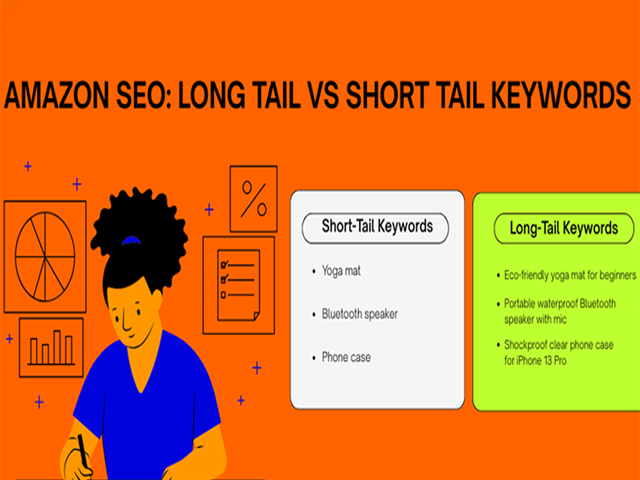
Long-Tail vs Short-Tail Keywords: What Works Best on Amazon?
Every product on Amazon starts with a search. What buyers type in that little search bar decides which listings show up, which ones get clicked, and eventually, which products get sold. That is why keywords matter so much. They connect the customer’s needs with your product. But not all keywords work the same way. Some are broad and short. Others are longer, more specific, and often more targeted.
Learn More →
FBA vs FBM in 2025: Which One Should You Choose?
Choosing between FBA and FBM is one of the most important decisions for Amazon sellers in 2025. The way you fulfill orders can shape your costs, customer experience and long-term growth. Fulfillment by Amazon, or FBA gives access to fast shipping with Prime and takes care of storage packing and returns.
Learn More →
How to Launch a Product on Amazon with Zero Reviews
Launching a product on Amazon with zero reviews may seem tough but it is possible with the right plan and clear execution. In 2025 Amazon gives more weight to how well your product performs in the first few weeks than how many reviews it has.
Learn More →
The Ultimate Amazon FBA Checklist for New Sellers
Your experience of being an Amazon FBA seller can be like a roller coaster ride, but there is much to get to know as well. Choosing the right product, managing the inventory, handling everything, every step counts in case you want to expand your store in the right direction.
Learn More →
Top Mistakes New Amazon Sellers Make and How to Avoid Them
Amazon selling may appear to be intriguing at first. You have millions of buyers at your fingertips, and with FBA and Seller Central, making your brand name appear is easy to do. But once you're in, you'll find it's not as easy as it seems. Most new sellers plunge into the work without knowing how Amazon works.
Learn More →
Understanding Amazon’s A9 Algorithm: A Complete Guide
Every product on Amazon starts with a search. What buyers type in that little search bar decides which listings show up, which ones get clicked, and eventually, which products get sold. That is why keywords matter so much. They connect the customer’s needs with your product. But not all keywords work the same way. Some are broad and short.
Learn More →
How to Write High-Converting Amazon Product Titles and Descriptions
When shoppers search on Amazon, the first thing that they see is your product listing. You lose them within 2 to 4 seconds when your title is vague or when your description is not being understood. However, when your content is well written, it does more than inform.
Learn More →
Why Your Amazon Listings Aren’t Converting (and How to Fix Them)
Selling on Amazon is more than getting your products listed. Your listing is your digital storefront, and every detail in it works like a sales pitch to the shopper. A good product with poor presentation will often lose to a competitor who communicates value more clearly.
Learn More →
A/B Testing Amazon Listings: What You Need to Know
Selling on Amazon is a constant process of improvement. The marketplace changes fast, and customer preferences shift without much notice. What works in a listing today may not be as effective next month. This is where A/B testing could turn out to be a very useful instrument to sellers who wish to make decisions on the basis of facts rather than guesses.
Learn More →
Using Backend Keywords on Amazon: Do They Still Matter?
When you list a product on Amazon, you face millions of competing items that are also fighting for visibility. Shoppers search with a wide mix of words. Some are common, while others are misspelled or written in different forms. To help sellers cover these variations, Amazon created backend keywords.
Learn More →
How to Improve Your Amazon Product Images for Better Clicks and Sales
Images are one of your most powerful tools for selling on Amazon. Customers choose to click before they even look at your product description or glance at your price point based on what they are viewing in the image. Over the past five years working closely with hundreds of Amazon sellers, I’ve witnessed how slight variations in product pictures can make huge differences in clicks and conversions.
Learn More →
Tracking Amazon Sales Trends: Tools & Strategies
Monitoring sales patterns at Amazon is not only what the successful Amazon sellers do, but it is also for everyone who aspires to establish a sustainable business. In the past five years, I have been assisting sellers to examine their performance statistics, identify trends early and make decisions that directly affect their profits.
Learn More →
Understanding Amazon Market Demand with Keyword Tools
Understanding what customers are searching for on Amazon is at the heart of smart selling. For the past five years, I’ve helped sellers connect with real demand by using keyword tools that uncover what shoppers are actively looking for. Market demand isn't a figure that represents consumer intention, interest, and purchasing behavior. If you ignore those indicators,
Learn More →
How to Do Competitive Analysis for Amazon Sellers
Winning on Amazon starts with clear competitive analysis, not guesswork. This guide breaks down how top sellers research rivals, read the market, and turn data into action. You will learn how to map your category, profile leading brands and emerging threats, and benchmark price, content quality, and delivery promises. We explain how to audit listings, uncover keyword gaps, and analyze images, A plus content, and reviews to find conversion levers.
Learn More →
Keyword Research for KDP: How to Rank Your Book on Amazon
With Kindle Direct Publishing (KDP), writers can self-publish and reach Amazon’s readership. Thousands of new books appear on Amazon every day, and without proper Amazon book keywords, your book can remain hidden. Keyword research on KDP helps your book show up in searches and reach the intended readers.
Learn More →
7 Mistakes First-Time KDP Authors Make (and How to Avoid Them)
Publishing a book for the first time can be exciting, but it can also be tricky. Many first-time Kindle Direct Publishing authors make mistakes that slow down their success. Avoiding these errors early can save time, money, and frustration. Here are seven common mistakes and tips on how to avoid them.
Learn More →
Free vs Paid Amazon Seller Tools: What You Really Need
Selling on Amazon is more competitive than ever. Millions of sellers compete for buyers, visibility, and sales every day. To succeed, sellers need the right tools to research products, track competitors, optimize listings, and analyze performance. One of the biggest decisions sellers face is whether to rely on free tools or invest in paid tools. Both can be useful, but each serves different purposes.
Learn More →
Top Chrome Extensions for Amazon Sellers in 2025
Amazon has become one of the busiest online marketplaces in the world. Every year more sellers join the platform and the level of competition increases. Sellers must understand demand, study buyer behavior, and pick the right products at the right time. In 2025, many tools promise to help with Amazon research, but only a few deliver real value through simple and accurate data. One Chrome extension that continues to support sellers in an effective way is Squatio.
Learn More →
Book a Demo
Book a Demo of Squatio’s All-in-One Amazon FBA Seller Tool
This free demo shows you how to track important metrics and grow your business effectively.

Enter your information to register for the Free demo.